Civil Services Examination · Question 20
The demand for the Tebhaga Peasant Movement in Bengal was for
Show answer & explanationShow explanation
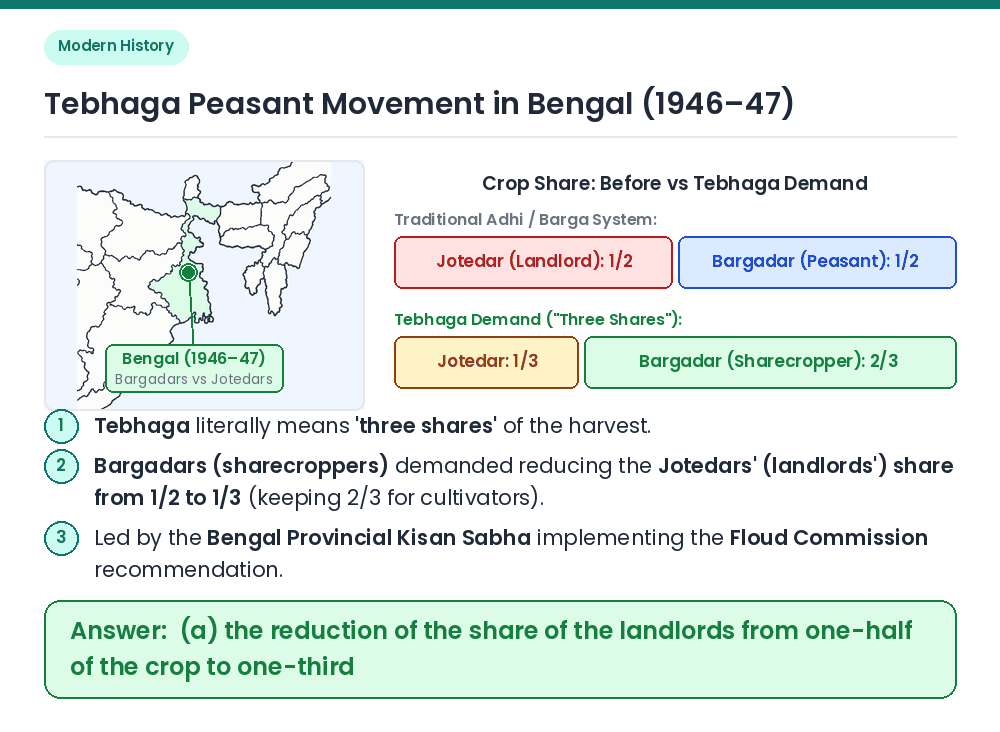
Answer: (A) the reduction of the share of the landlords from one-half of the crop to one-third
Concept: The Tebhaga Movement (1946–47) was a militant sharecroppers' movement in Bengal organised by the Bengal Provincial Kisan Sabha. Traditional vs Demanded Share: Under the existing barga (adhi) system, sharecroppers (bargadars/adhiars) had to give half (1/2) of their produce to the landlords (jotedars). 'Tebhaga' (literally three parts) demanded that the landlords' share be reduced from one-half (1/2) to one-third (1/3), leaving two-thirds (2/3) of the crop with the sharecroppers. Commission Basis: This demand was based on the earlier recommendation of the Bengal Land Revenue Commission (Floud Commission, 1940). Result: The primary demand of the Tebhaga movement was the reduction of the landlords' share from one-half of the crop to one-third. Related Facts: • Central Slogan: 'Nij khamare dhan tolo' — sharecroppers insisted on storing paddy in their own threshing floors (khamars) instead of the jotedar's house. • Key Leaders: Swami Sahajanand, Indulal Yagnik, Bankim Mukherjee, Kansari Halder and Ila Mitra. Correct Answer: (a) the reduction of the share of the landlords from one-half of the crop to one-third