Civil Services Examination · Question 21
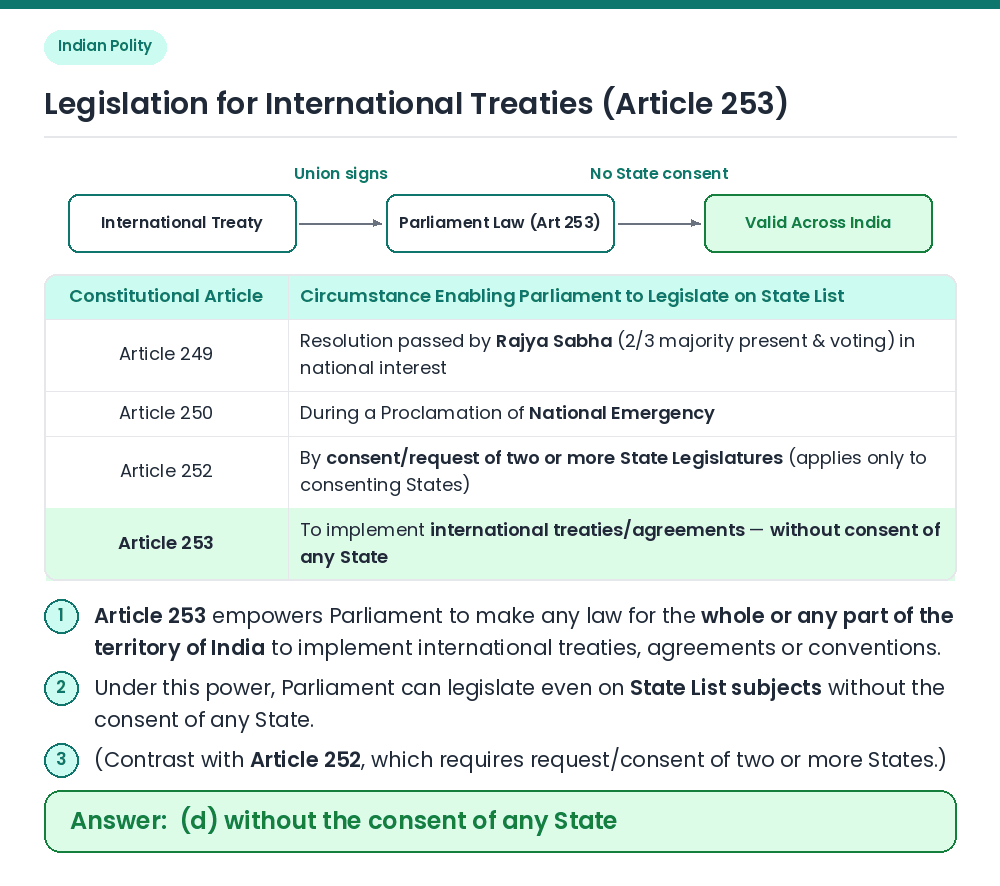
The Parliament can make any law for whole or any part of India for implementing international treaties
Show answer & explanationShow explanation
Answer: (D) without the consent of any State
Concept: Article 253 in Part XI of the Constitution deals with legislation for giving effect to international agreements. Scope of Article 253: Notwithstanding the normal federal distribution of legislative powers between the Union and the States, Article 253 empowers Parliament to make any law for the whole or any part of the territory of India for implementing any international treaty, agreement or convention. Consent of States: This power is exercised unilaterally by Parliament without requiring the consent of any State legislature, even if the subject falls in the State List. Result: Parliament can enact such laws without the consent of any State. Related Facts: • Examples under Article 253: The Environment (Protection) Act, 1986 and the Biological Diversity Act, 2002 were enacted by Parliament under Article 253 to implement UN conference decisions. • Entry 14 of Union List: Entering into treaties and agreements with foreign countries and implementing them is a Union List subject. Correct Answer: (d) without the consent of any State