Civil Services Examination · Question 97
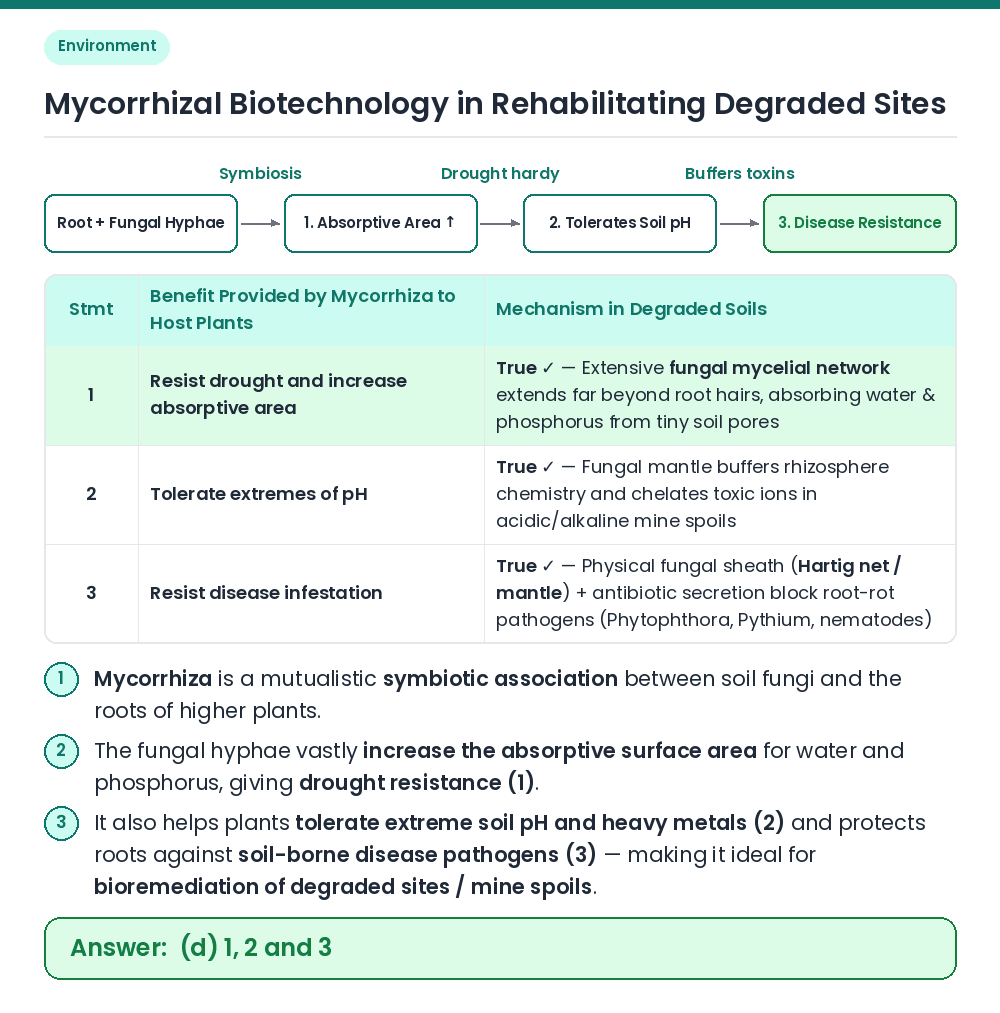
Mycorrhizal biotechnology has been used in rehabilitating degraded sites because mycorrhiza enables the plants to 1. resist drought and increase absorptive area 2. tolerate extremes of pH 3. resist disease infestation Select the correct answer using the codes given below.
Show answer & explanationShow explanation
Answer: (D) 1, 2 and 3
Concept: Mycorrhiza is a symbiotic (mutualistic) association between a fungus and the roots of a vascular plant, where the plant supplies carbohydrates and the fungus enhances water and mineral uptake. Check Benefit 1: The fine, branching fungal hyphae (mycelium) extend far into the soil beyond the root depletion zone, increasing the effective absorptive surface area by 10 to 100 times, improving uptake of phosphorus and water, and enabling plants to resist drought (1 is correct). Check Benefits 2 & 3: Mycorrhizal fungi regulate rhizosphere chemistry, immobilize toxic heavy metals, and allow plants to tolerate extremes of soil pH on acidic mine spoils or alkaline wastelands (2 is correct). They also form a protective physical mantle around roots and secrete antimicrobial compounds that shield roots from soil-borne pathogens and nematodes, conferring disease resistance (3 is correct). Result: All three statements 1, 2 and 3 are correct. Related Facts: • Ectomycorrhiza vs Endomycorrhiza (VAM/AM): Ectomycorrhiza forms an external sheath and Hartig net (common in pines, oaks, orchids), whereas Vesicular-Arbuscular Mycorrhiza (VAM, e.g., Glomus) penetrates cortical cells of crop plants. • Phosphorus Mobilization: Mycorrhiza is especially crucial for solubilizing and absorbing immobile soil phosphate ions. Correct Answer: (d) 1, 2 and 3