Civil Services Examination · Question 25
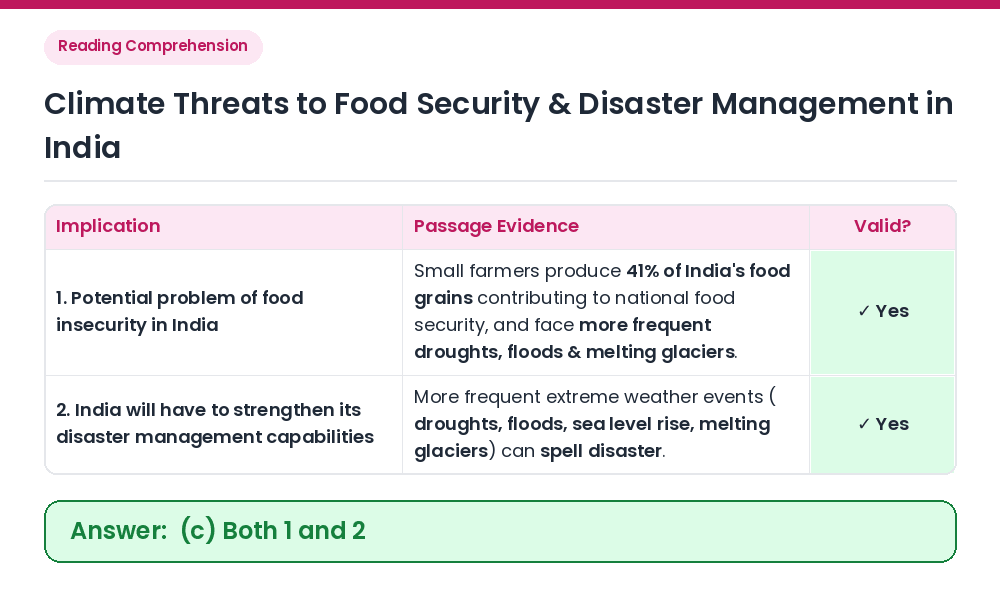
Passage – 3 The rural poor across the world, including India, have contributed little to human-induced climate change, yet they are on the frontline in coping with its effects. Farmers can no longer rely on historical averages for rainfall and temperature, and the more frequent and extreme weather events, such as droughts and floods, can spell disaster. And there are new threats, such as sea level rise and the impact of melting glaciers on water supply. How significant are small farms? As many as two billion people worldwide depend on them for their food and livelihood. Small-holder farmers in India produce 41 percent of the country's food grains, and other food items that contribute to local and national food security. The above passage implies that 1. There is a potential problem of food insecurity in India. 2. India will have to strengthen its disaster management capabilities. Which of the above assumptions is/are valid?
Show answer & explanationShow explanation
Answer: (C) Both 1 and 2
Check Statement 1: Small-holder farmers in India produce 41% of the country's food grains for local and national food security, and they are on the frontline of climate change threats. Thus, there is a potential problem of food insecurity in India. (Valid) Check Statement 2: The passage warns that 'more frequent and extreme weather events, such as droughts and floods, can spell disaster' along with sea-level rise and melting glaciers. Coping with these disasters implies India must strengthen its disaster management capabilities. (Valid) Result: Both 1 and 2 are valid. Correct Answer: (c) Both 1 and 2