Civil Services Examination · Question 43
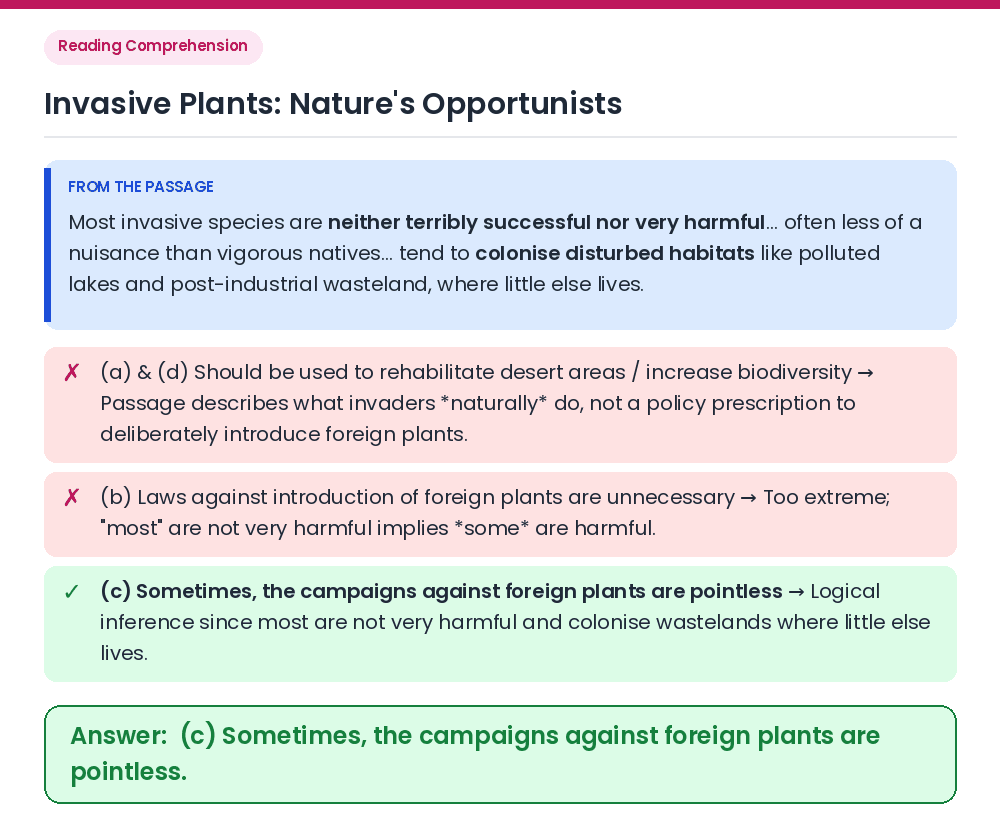
Passage – 2 Most invasive species are neither terribly successful nor very harmful. Britain's invasive plants are not widespread, not spreading especially quickly, and often less of a nuisance than vigorous natives such as bracken. The arrival of new species almost always increases biological diversity in a region; in many cases, a flood of newcomers drives no native species to extinction. One reason is that invaders tend to colonise disturbed habitats like polluted lakes and post-industrial wasteland, where little else lives. They are nature's opportunists. Which one of the following is the most logical and rational inference that can be made from the above passage?
Show answer & explanationShow explanation
Answer: (C) Sometimes, the campaigns against foreign plants are pointless.
Analyze Passage: The passage argues that 'Most invasive species are neither terribly successful nor very harmful', often drive no native species to extinction, and merely colonise disturbed habitats (polluted lakes, post-industrial wasteland) where little else lives. Evaluate Options: ⇒ (a) & (d) Overreach: Describing where invasive species naturally grow does not mean countries should deliberately introduce them into deserts or to boost biodiversity. ⇒ (b) Extreme: Because only 'most' (not all) invasive species are harmless, blanket removal of laws is unwarranted. Result: The balanced, logical inference is that campaigns against foreign plants are *sometimes* pointless. Correct Answer: (c) Sometimes, the campaigns against foreign plants are pointless.