Civil Services Examination · Question 80
The basic aim of Lead Bank Scheme is that
Show answer & explanationShow explanation
Answer: (C) individual banks should adopt particular districts for intensive development
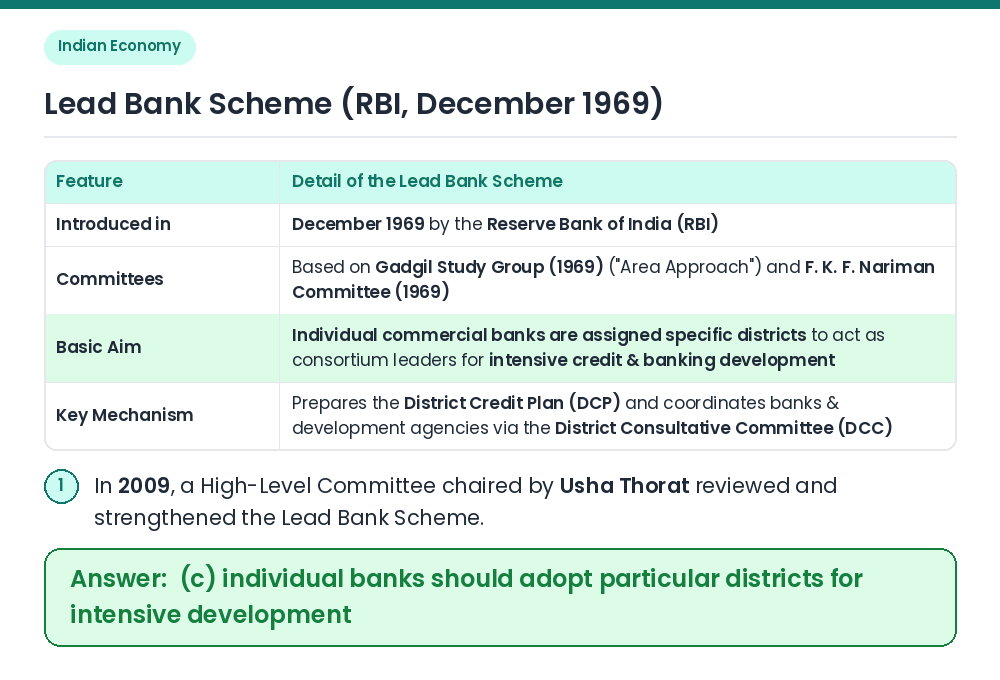
Given / Concept: The Lead Bank Scheme was introduced by the Reserve Bank of India in December 1969 shortly after the nationalization of 14 major commercial banks. Area Approach Objective: Based on the 'Area Approach' recommended by the Gadgil Study Group and the Nariman Committee, individual banks (both public and private) were allotted specific districts where they act as the 'Lead Bank'—coordinating all credit institutions in that district to promote intensive banking and priority-sector development ⇒ Option (c) is correct. Elimination of Other Options: The Lead Bank does not have a monopoly on opening branches in the district, nor is the scheme about inter-bank competition; rather, it acts as a consortium leader for coordinated district development. Result: The basic aim of the Lead Bank Scheme is that individual banks should adopt particular districts for intensive development. Related Facts: Key facts about the Lead Bank Scheme: • Founding Committees (1969): D. R. Gadgil Study Group (recommended the Area Approach) and F. K. F. Nariman Committee (recommended allotting districts to individual banks). • District Credit Plan (DCP): The Lead Bank prepares annual District Credit Plans and convenes the District Consultative Committee (DCC) chaired by the District Collector. • Usha Thorat Committee (2009): Constituted by RBI to review the Lead Bank Scheme with a focus on 100% financial inclusion. Correct Answer: (c) individual banks should adopt particular districts for intensive development