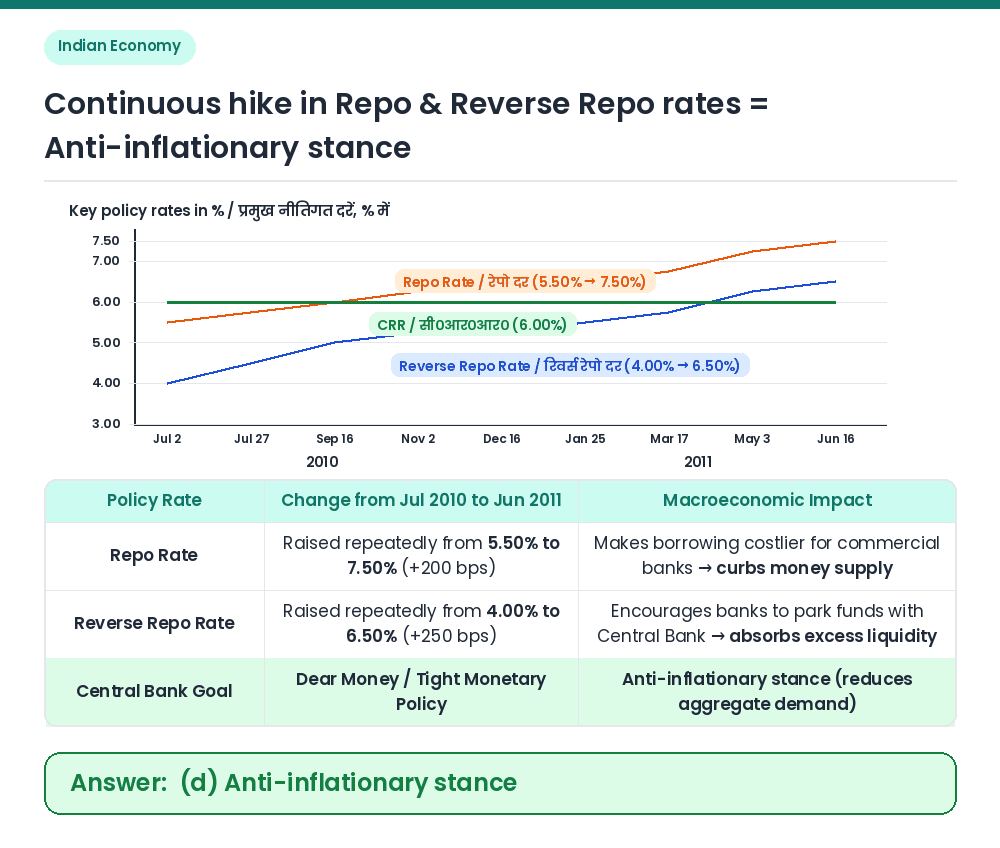
Civil Services Examination · Question 73
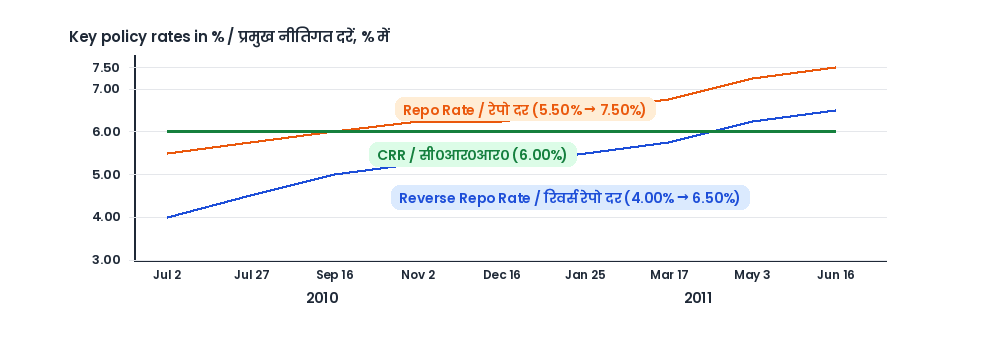
The graph given below indicates the changes in key policy rates made by the Central Bank several times in a year : Which one of the following can be the most likely reason for the Central Bank for such an action?
Show answer & explanationShow explanation
Answer: (D) Anti-inflationary stance
Given: A graph showing the Central Bank (RBI) continuously raising the Repo Rate (from 5.50% to 7.50%) and Reverse Repo Rate (from 4.00% to 6.50%) between July 2010 and June 2011. Analyze effect of raising Repo and Reverse Repo rates: Raising the Repo Rate increases the cost of borrowing for commercial banks, and raising the Reverse Repo Rate incentivizes banks to park surplus funds with the Central Bank. Effect on liquidity and inflation: This reduces liquidity (money supply) and credit growth in the economy, which is the classic monetary policy tool to curb inflation (anti-inflationary stance). Related Facts: • Repo Rate is the rate at which the Central Bank (RBI) lends short-term funds to commercial banks against government securities. • Raising policy rates is called a hawkish or tight (contractionary) monetary policy, used to control inflation. • To increase liquidity (Option b), the Central Bank cuts Repo and CRR rates instead of raising them. Correct Answer: (d) Anti-inflationary stance