Civil Services Examination · Question 71
With reference to the religious practices in India, the "Sthanakvasi" sect belongs to
Show answer & explanationShow explanation
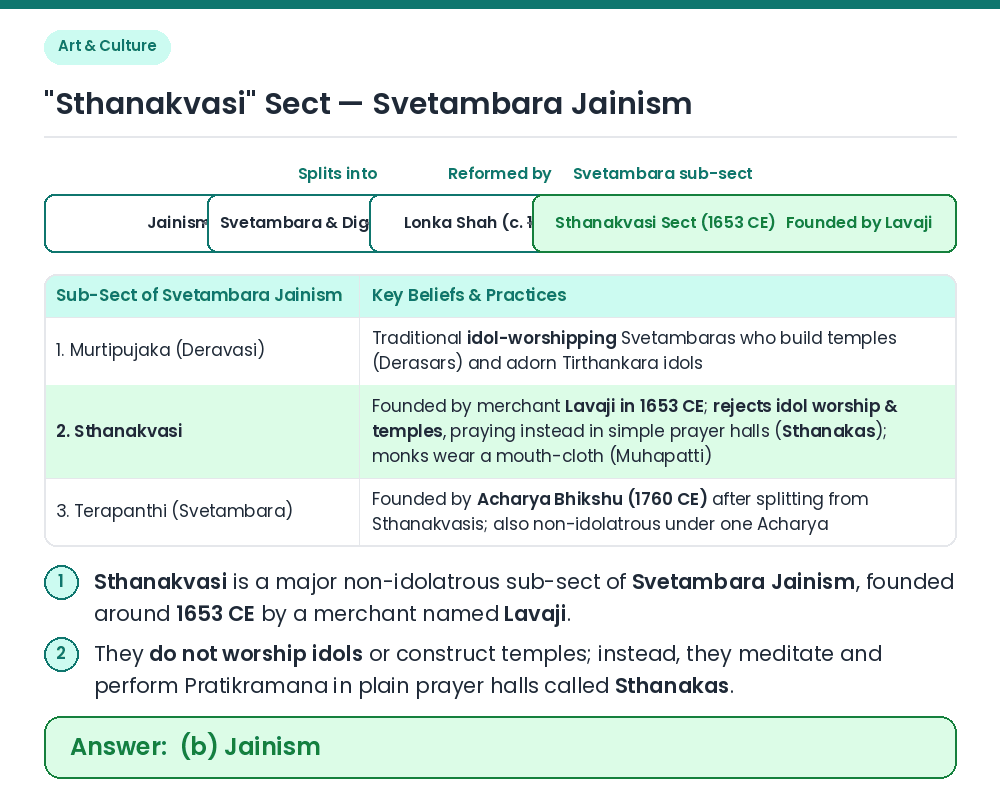
Answer: (B) Jainism
Concept: Major sects and sub-sects of Jainism (Svetambara and Digambara traditions). Identify Sthanakvasi: The 'Sthanakvasi' sect is a reformist sub-sect of Svetambara Jainism founded around 1653 CE by a Gujarati merchant named Lavaji, tracing its ideological roots to the 15th-century non-idolatrous reformer Lonka Shah (Lumpaka). Core Beliefs: Sthanakvasis believe that idol worship (Murtipuja) is not mentioned in the original Jain Agamas; therefore, they do not worship idols or visit temples, and instead gather for prayer, meditation, and discourse in simple halls called 'Sthanakas'. Result: The 'Sthanakvasi' sect belongs to Jainism, making option (b) correct. Related Facts: • Three Sub-Sects of Svetambara Jainism: (1) Murtipujaka / Deravasi (idol-worshippers), (2) Sthanakvasi (non-idolatrous, pray in Sthanakas), and (3) Svetambara Terapanthi (founded by Acharya Bhikshu in 1760 CE). • Sub-Sects of Digambara Jainism: Bisapantha, Terapantha (Digambara), Taranapantha (Samaiyapantha), Gumanapantha, and Totapantha. • Distinct Practices of Sthanakvasi Ascetics: Monks and nuns wear white robes, constantly wear a white cloth strip over their mouth ('Muhapatti') to avoid harming microscopic life (Vayukaya jivas), and accept only 32 Jain Agamas as authentic. Correct Answer: (b) Jainism