Civil Services Examination · Question 70
The Rowlatt Act aimed at
Show answer & explanationShow explanation
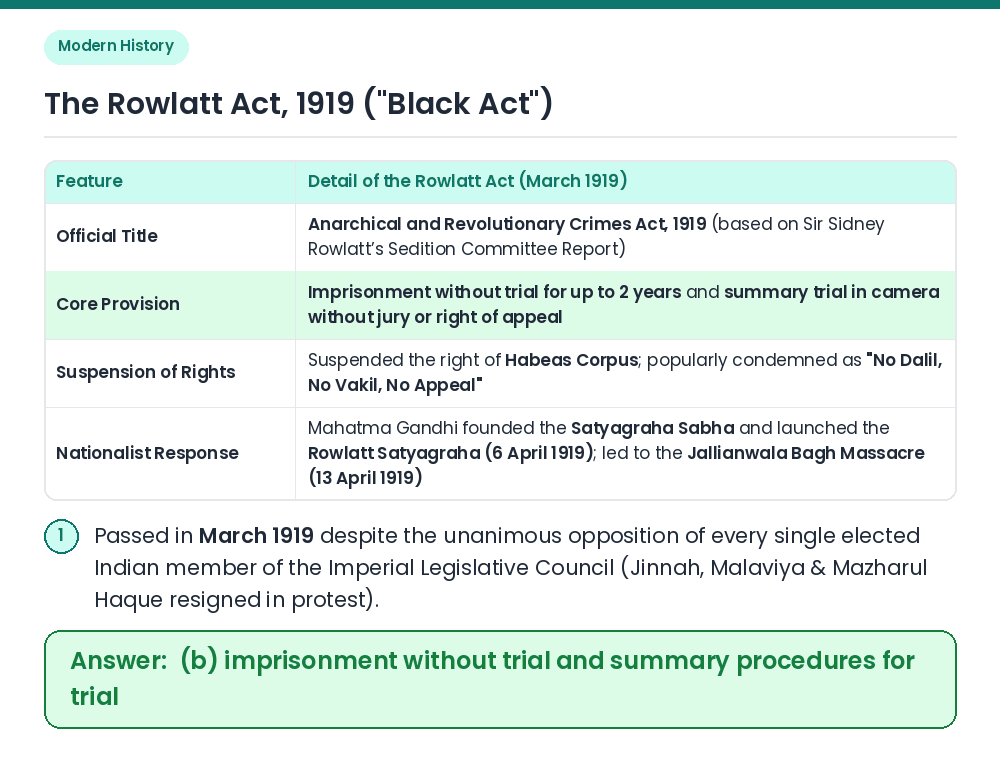
Answer: (B) imprisonment without trial and summary procedures for trial
Given / Concept: Officially titled the Anarchical and Revolutionary Crimes Act, 1919, the Rowlatt Act was passed in March 1919 on the recommendations of the Sedition Committee chaired by Justice Sir Sidney Rowlatt. Core Provisions: Built to replace the expiring wartime Defence of India Act, 1915, it empowered the colonial government to arrest and detain political suspects without warrant and imprison them without trial for up to two years, along with holding summary in-camera trials by special three-judge panels without juries or appeal ⇒ Option (b) is correct. Elimination of Other Options: World War I had already ended in November 1918 (ruling out a); the Khilafat Movement gained momentum after the Rowlatt Act (ruling out c); and its primary focus was preventive detention and summary trials rather than a press censorship act (ruling out d). Result: The Rowlatt Act aimed at imprisonment without trial and summary procedures for trial. Related Facts: Key facts around the Rowlatt Act (1919): • Popular Slogan: Condemned across India as the 'Black Act' with the slogan 'Na Dalil, Na Vakil, Na Appeal' (No argument, no lawyer, no appeal). • Council Resignations: Madan Mohan Malaviya, Muhammad Ali Jinnah, and Mazharul Haque resigned from the Imperial Legislative Council in protest. • Aftermath: Mahatma Gandhi launched his first all-India mass strike (Rowlatt Satyagraha on 6 April 1919), and the arrest of Dr. Saifuddin Kitchlew and Dr. Satyapal in Punjab led directly to the Jallianwala Bagh Massacre on 13 April 1919. Correct Answer: (b) imprisonment without trial and summary procedures for trial