Civil Services Examination · Question 47
If a commodity is provided free to the public by the Government, then
Show answer & explanationShow explanation
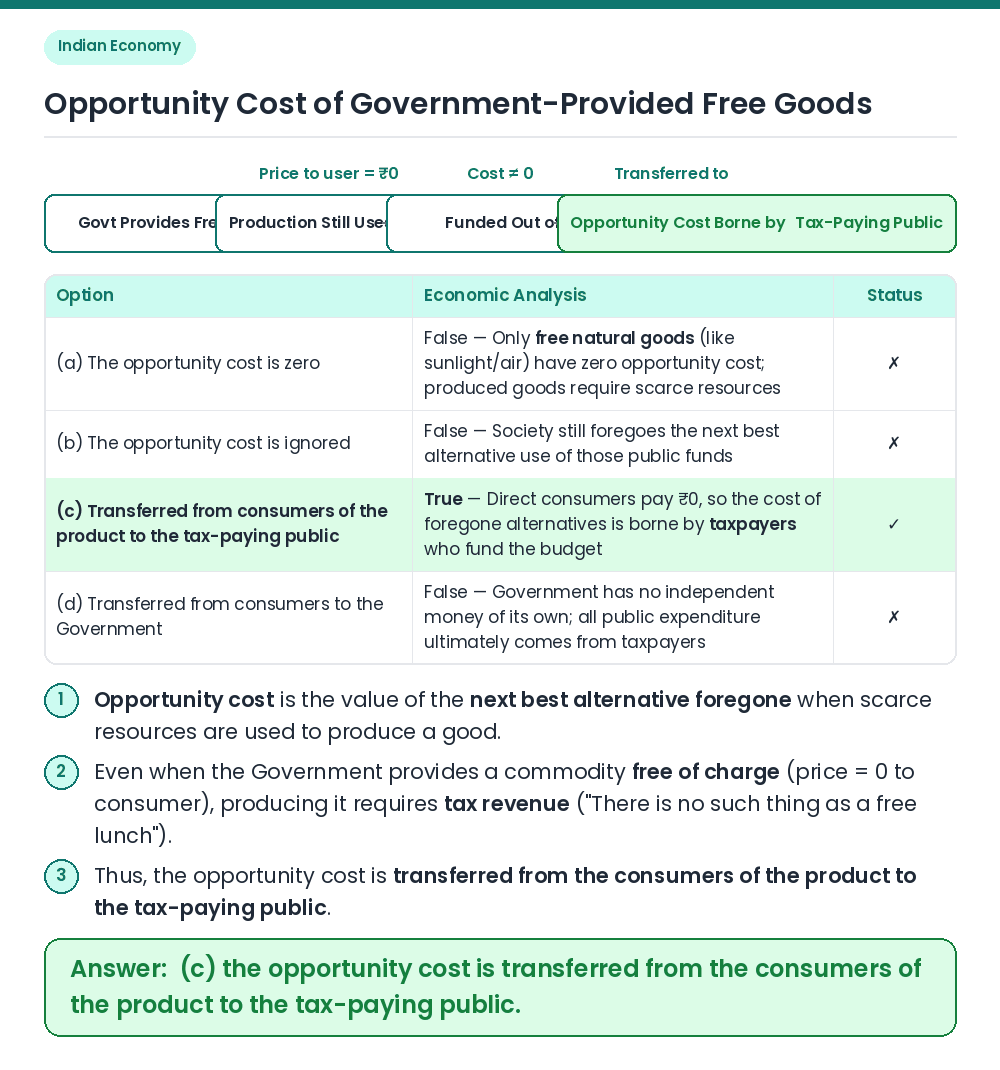
Answer: (C) the opportunity cost is transferred from the consumers of the product to the tax-paying public.
Concept: Microeconomic concept of 'Opportunity Cost' (value of the next best alternative foregone) applied to government subsidies and public goods. Why Opportunity Cost is Not Zero: Producing any economic commodity requires scarce resources (labour, capital, raw materials). Even if the Government charges zero price to the consumer, those resources could have been used to build schools, hospitals, or roads ⇒ Opportunity cost is never zero. Who Bears the Cost: Since the Government finances free commodities through tax revenues (or public borrowing repaid via future taxes), the burden of the foregone alternative is shifted from the direct consumer to the tax-paying public. Result: The opportunity cost is transferred from the consumers of the product to the tax-paying public, making option (c) correct. Related Facts: • Economic Maxim: Popularized by economist Milton Friedman — 'There is no such thing as a free lunch' (every free provision carries a real resource cost borne by society/taxpayers). • Free Goods vs Economic Goods: Only abundant natural gifts like sunlight or open air have zero opportunity cost; government-supplied goods (free ration, free electricity, free vaccines) are economic goods with positive opportunity cost. • Why Not Option (d): The Government is merely an agent managing public funds collected from taxpayers; ultimately, the tax-paying public bears the opportunity cost. Correct Answer: (c) the opportunity cost is transferred from the consumers of the product to the tax-paying public.